
Megaways Games: Why Dynamic Symbol Counts Do Not Guarantee More Wins

Megaways Games: Why Dynamic Symbol Counts Do Not Guarantee More Wins

A spin showing 100,000 ways to win certainly looks more promising than one displaying only a few hundred. More reel positions appear, more symbols fill the screen, and suddenly there seem to be combinations everywhere.

That visual logic is partly correct—but mathematically incomplete.

In Megaways Games, Dynamic Symbol Counts change the number of visible positions and therefore the number of possible symbol paths available on a particular spin. Evolution explains that the Megaways random reel modifier changes how many symbols appear on the reels from spin to spin.

What it does not mean is that a spin with ten times more ways necessarily has ten times the probability of producing a win. Hit frequency depends on how reel geometry interacts with symbol distribution, wilds, payouts, cascades, and the game’s overall mathematical model.

Ways-to-Win Measures Combinations, Not Winning Probability

Start with six reels.

If every reel displays seven symbols, the traditional Megaways calculation produces:

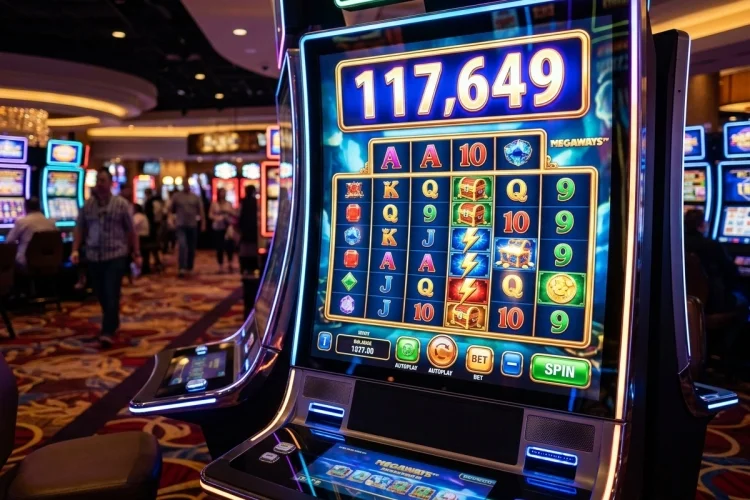
7 × 7 × 7 × 7 × 7 × 7 = 117,649 ways

Big Time Gaming continues to feature the 117,649 figure across Megaways releases, including Max Megaways and Fireworks Megaways.

Now reduce the visible heights to:

2 × 3 × 2 × 4 × 3 × 2

That produces only:

288 ways

The first configuration has more than 400 times as many positional routes.

Does that make it more than 400 times as likely to generate any win?

No.

Most of those routes may contain combinations that do not qualify for a payout. To convert potential paths into actual hit frequency, we need to know what symbols occupy them.

Dynamic Symbol Counts Affect Reel Coverage

The easiest way to understand the connection is to think about coverage.

A taller reel displays more symbols. More visible symbols mean more chances for copies of a required symbol to appear somewhere on that reel.

Imagine a simple hypothetical model where a particular symbol has a 15% probability per independent position.

With two visible positions, the chance of at least one copy would be:

1 − 0.85² ≈ 27.8%

With seven positions:

1 − 0.85⁷ ≈ 67.9%

The difference is substantial.

But real slot outcomes are not necessarily built from independent identical positions, so this calculation is only an illustration of the mathematical idea.

Gaming standards require RNG selections and outcome mappings to conform to the game’s intended random distribution and rules. GLI describes RNG testing as checking systems for unpredictability and unwanted bias, while UK regulation requires random inputs to correspond correctly with game probabilities and paytables.

The true calculation therefore depends on each game’s internal model.

Symbol Weighting Can Offset Extra Positions

Suppose Game A and Game B both allow up to 117,649 ways.

Game A uses common low-value symbols heavily throughout its outcome distribution. Game B makes several paying symbols less frequent but assigns them larger prizes.

The maximum reel geometry can be identical while the hit frequncy differs significantly.

This illustrates why Dynamic Symbol Counts should never be analysed separately from symbol weighting.

A developer has several mathematical controls available. Symbol probabilities can change, payout values can differ, wilds can appear with different frequencies, and bonuses can contribute more or less to total expected return.

The visible reel system provides opportunities.

The symbol model decides how frequently those opportunities turn into qualifying combinations.

More Matching Copies Can Increase the Number of Hits Inside One Spin

Taller reels become especially powerful when they contain duplicate matching symbols.

Imagine a four-reel win where the target symbol appears:

2 × 2 × 3 × 2

times across consecutive reels.

That creates:

24 winning ways

If the first reel displayed only one matching copy instead of two, the result would fall to:

12 ways

The overall spin still counts as one wagering event, but its payout can contain many individual winning combinations.

This is where discussing “hit frequency” requires some care.

One metric might measure how many spins return any prize. Another analysis could examine the number of winning combinations generated inside each successful spin.

Dynamic heights can influence both, but not necessarily by the same amount.

A larger reel layout may make a successful outcome more combinatorially dense without changing the percentage of paid spins in exactly the same proportion.

Cascades Make Hit Frequency Even More Complicated

Megaways mechanics are frequently combined with reactions.

Big Time Gaming’s Fireworks Megaways, for example, uses symbol cascades in which winning symbols are removed and replaced, allowing additional winning configurations to develop from the same initial wager.

Vegas Megaways similarly replaces participating winning symbols through reactions and allows another arrangement to form.

Consider a paid spin with three reactions:

Initial grid → Win
Reaction 1 → Win
Reaction 2 → Win
Reaction 3 → No win

Was that one hit or three?

For player-session statistics, the original wager may simply be recorded as a winning spin. From a feature-design perspective, however, three separate winning evaluations occurred.

This explains why comparing hit rates between slots can be misleading unless the exact definition used by the game or data source is known.

Larger Reels Can Change Cascade Survival

Dynamic Symbol Counts can also influence the probability that a reaction sequence continues.

Suppose a cascade replaces winning symbols with new symbols.

A taller reel provides more positions in which new matching symbols might appear, although its precise continuation probability still depends on the underlying symbol distribution.

This creates an interesting combinitorial effect.

An expanded layout can produce several copies of a common symbol, creating a win. Those symbols disappear, exposing more replacements, and another combination may form.

A smaller configuration has fewer available positions participating in the same process.

However, developers can compensate mathematically through symbol weights, payout amounts, feature probabilities, or wild frequency. So greater reel height cannot be used alone to predict cascade survival.

Features Show How Reel Height Can Be Manipulated Intentionally

Some Megaways features make the relationship between reel height and potential combination density very clear.

Max Megaways includes an Increased Ways feature where at least five symbols occur on every reel during Free Spins. It can also trigger Maximum Megaways, where a spin uses seven symbols per reel.

Gold Megaways provides another example. During its Free Spins, expansion symbols can increase individual reel heights, eventually allowing up to one million ways when reels reach expanded configurations.

Wheel of Fortune Megaways similarly uses expansion symbols capable of increasing reel heights during its feature and advertises up to one million ways in Free Spins.

These mechanics demonstrate that Dynamic Symbol Counts can be treated as an active mathematical feature rather than a fixed background property.

Increasing reel height changes the available connection space. What developers do with that space determines the real return.

Hit Frequency, RTP, and Volatility Must Be Separated

Three concepts are often mixed together when discussing Megaways.

Hit frequency asks how often a wager returns something.

RTP measures the theoretical proportion of wagered value returned over a very large number of games.

Volatility describes how unevenly that return is distributed across outcomes.

A slot could theoretically offer frequent small hits and rare large prizes. Another could produce fewer winning spins while making successful outcomes more valuable.

Both could still have similar RTP figures.

The changing reel count can contribute to those characteristics, but it does not determine them independently.

Regulators require outcome mappings to follow the game’s stated probabilities rather than adjusting dynamically in response to earlier player results.

So a tall reel does not appear because the player is “due” a win, nor does a smaller layout indicate the game is compensating for a previous payout.

Each outcome follows the certified mathematical rules.

Maximum Megaways Is Not the Best Measure of a Game

Marketing naturally highlights maximum ways because the number is easy to understand.

But for mathematical comparision, it provides only one piece of information.

Imagine two titles both reaching 117,649 ways. One might use frequent reactions, abundant low-value symbols, and moderate multipliers. Another could rely more heavily on rare wild combinations and high-value bonus sequences.

The headline grid size is the same.

The experience is not.

Hit frequency is shaped by the entire probability distribtion, including how commonly symbols appear, how combinations qualify, what wilds substitute for, and how often follow-up features occur.

That makes maximum ways useful for describing reel architecture, but limited for predicting how frequently a player will see a payout.

In Megaways Games, Dynamic Symbol Counts can change hit frequency because taller reels provide more opportunities for matching symbols and multiple winning combinations. Yet more positions do not guarantee more wins. Symbol weighting, cascades, wilds, payout values, and feature probability still shape the final results.

For a meaningful comparison, study the whole mathematical model rather than relying on the maximum Megaways number.

Megaways Slots vs Traditional Payline Slots: Wins and Risk

Megaways Slots vs Traditional Payline Slots: Wins and Risk

The phrase “117,649 ways to win” sounds more attractive than “20 paylines.” However, comparing those numbers directly can be misleading. They explain how the game checks symbol combinations, not how frequently players make a profit.

This guide to Megaways Slots vs Traditional Payline Slots focuses on payouts, volatility, RTP, and practical risk. Megaways games often contain changing reels, cascades, and large maximum-win figures.

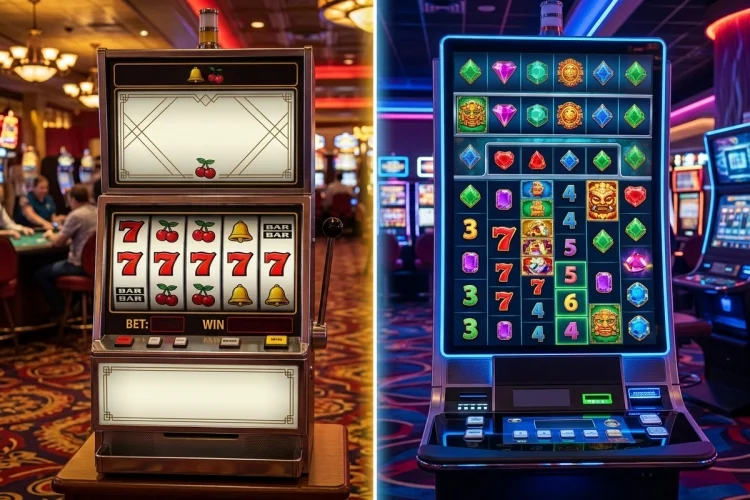
Traditional titles usually provide a fixed grid and easier-to-follow line patterns. Neither structure automatically offers a higher return.

Two games using different formats can share the same RTP while distributing their prizes in completely different ways. Understanding that distinction is more useful than choosing the title with the biggest advertised number.

More Ways Do Not Guarantee More Wins

A Megaways grid with 117,649 routes provides many possible combinations of symbol positions. Those routes only pay when the correct matching icons appear across the required reels.

A traditional slot with 20 paylines checks fewer predefined patterns. However, its symbol frequencies and payout table can be designed to produce wins at a different rate.

The number of ways or lines cannot reveal the full probability of winning. It must be considered alongside the mathematical model.

RTP Is Separate From the Slot Format

Return to Player represents the theoretical percentage of total wagers returned as prizes over extended play.

Megaways itself does not have one standard RTP. Individual titles and software versions can use different percentages. Traditional line games also vary widely.

The UK Gambling Commission requires regulated remote games to provide information such as RTP, house edge, or the probability of winning events before a customer gambles.

Check the percentage inside the active title rather than assuming that its reel format determines its value.

Volatility Shapes the Session

Volatility describes how prizes may be distributed. A high-volatility game may go through longer periods without a substantial payout but offer access to larger potential wins.

Many Megaways titles are promoted with complex bonuses and large maximum multipliers, which can be associated with high volatility. For example, Evolution describes MONOPOLY Megaways as a high-volatility game.

Traditional paylines can also be highly volatile. A fixed grid does not automatically mean steadier results.

Hit Frequency Is Not Profit Frequency

Hit frequency estimates how often a recognised winning combination occurs. It does not show how often a payout exceeds the stake.

Suppose a player wagers $1 and receives $0.40. The game records a win, but the net result is a loss of $0.60.

A title can therefore create frequent animations while gradually reducing the balance. Compare every return with the cost of the triggering spin.

Cascades Can Extend One Paid Round

Megaways slots frequently include reactions. After a winning combination, its symbols disappear and replacements enter the grid.

Several consecutive wins can therefore come from one initial stake. Bonanza uses Dual Reactions alongside up to 117,649 winning ways.

Traditional titles may also include avalanches or cascades. Gonzo’s Quest, for example, uses a 20-payline layout with avalanche mechanics and increasing multipliers.

Cascades are therefore common in Megaways but not exclusive to it.

Bonus Features Can Concentrate Returns

A portion of a game’s theoretical RTP may come from free spins, wild features, multipliers, or jackpots.

If important prizes are concentrated in a rare bonus round, the base game may feel less rewarding during short sessions. A title with simpler paylines may distribute its return differently.

This does not make either format better. It means players should check how the bonus is triggered, whether it can be retriggered, and how its payouts are calculated.

Compare the Cost of Repeated Spins

Stake size can affect a short session more immediately than a small RTP difference.

A $20 budget covers 100 spins at $0.20 but only 20 spins at $1, before accounting for returned prizes. A dynamic grid does not reduce the price of repeated rounds.

Confirm the total bet before every session. Do not increase it because the reels have recently displayed smaller grids or several near misses.

How to Make a Fair Comparison

Compare games using the same categories: official RTP, volatility, minimum stake, maximum payout, bonus contribution, and understandable rules.

Then consider the presentation. Traditional paylines may suit players who value consistency, while Megaways may appeal to those who enjoy changing layouts.

The best-informed choice is the game whose cost and mechanics you fully understand-not necessarily the one with the largest headline figure.

Megaways and traditional payline slots organise wins differently, but neither format removes random variation or the operator’s long-term mathematical advantage.

Megaways uses variable reels and adjacent-symbol routes, while traditional games evaluate fixed line patterns. Both can include cascades, free spins, multipliers, and high volatility.

Do not use the number of ways or paylines as a shortcut for judging value. Check the official RTP, understand how bonus features contribute to payouts, and calculate the cost of repeated spins.

Use only an affordable entertainment budget, avoid chasing losses, and choose a game based on clear rules rather than promises of easier wins.

Ways to Win Can a Megaways Slot Have Beyond 117,649?

Ways to Win Can a Megaways Slot Have Beyond 117,649?

The number 117,649 is closely associated with Megaways, but it is not the highest total ever used. Developers can add extra symbols, special reels, or expanding bonus grids that push the number much further.

Some games exceed 200,000 ways, while selected free-spin rounds can reach one million. These larger numbers make the screen more dynamic, but they should not be interpreted as guaranteed wins or automatically better value.

To understand how many ways to win can a Megaways slot have, players must check whether the advertised figure applies to the base game, a temporary feature, or the maximum possible bonus configuration.

Why 117,649 Is Only the Standard Maximum

The familiar figure comes from six reels displaying seven symbols each:

7 × 7 × 7 × 7 × 7 × 7 = 117,649

Big Time Gaming describes this as the standard maximum offered by its dynamic reel mechanic.

However, licensed developers can modify the grid. An extra reel, taller reel positions, or a special symbol-expansion system changes the calculation.

White Rabbit Reaches 248,832 Ways

Big Time Gaming’s White Rabbit begins with a Megaways structure that can expand during free spins.

Cake symbols add two extra positions to selected reels. When enough reel extensions occur, the game can reach a maximum of 248,832 Megaways.

That maximum applies to the expanded feature rather than every ordinary base-game spin. The current grid still depends on which reel extensions have been collected.

Pirates’ Plenty Can Offer 200,704 Ways

Another example is Pirates’ Plenty Megaways. Its Lady Anne feature adds a horizontal extra reel above the main grid.

Evolution’s official game page states that the fully loaded setup can produce up to 200,704 Megaways.

This illustrates how an additional reel can change the multiplication. The number is based on the complete feature layout rather than the standard six-reel formula.

Some Bonus Rounds Reach One Million

Wheel of Fortune Megaways uses a base game with up to 117,649 ways. During free spins, however, its expanded structure can offer as many as 1,000,000 ways to win.

The million-way figure is therefore not available on every paid spin. It is connected to a particular bonus state with different reel conditions.

When a game advertises an unusually large number, check where and when that maximum can occur.

Does One Million Ways Mean Better Odds?

Not automatically. One million possible position routes do not mean one million guaranteed chances of collecting a profitable payout.

The symbol probabilities and paytable values are designed around the larger grid. Developers can adjust how frequently premium symbols appear, how many adjacent reels are required, and how much each combination pays.

The RTP may therefore be similar to a game offering far fewer ways. The larger figure describes the layout, not the operator’s mathematical advantage.

RTP and Volatility Must Be Checked Separately

Return to Player estimates the percentage of total stakes returned as prizes over extensive play. Volatility describes how widely and unevenly those prizes may be distributed.

Neither measurement can be calculated from the number of Megaways alone. A million-way bonus could still belong to a highly volatile title with rare larger payouts.

Check the official game information rather than assuming that more symbol routes create a safer or more rewarding game.

Base-Game and Bonus Maximums Are Different

A common source of confusion is an advertisement that highlights the largest bonus configuration without explaining the ordinary base-game range.

Look for wording such as “up to,” “during free spins,” or “when fully expanded.” These phrases show that the maximum depends on special conditions.

Player-facing rules should explain the game mechanics, bonus qualifications, prizes, and likelihood of winning before money is committed.

How to Compare Megaways Games

Instead of comparing only the maximum number, examine the minimum and maximum reel heights, the number of reels, winning direction, cascade system, free-spin trigger, RTP, and volatility.

Also check whether large layouts occur regularly or only after collecting several rare feature symbols.

A smaller, clearer grid may be easier to understand than a game advertising hundreds of thousands of temporary routes.

Although 117,649 is the standard Megaways maximum, individual games can go much further.

White Rabbit can reach 248,832 ways, Pirates’ Plenty Megaways can offer 200,704, and Wheel of Fortune Megaways advertises up to one million during free spins.

These totals describe possible symbol routes under specific reel conditions. They do not guarantee payouts, improve RTP automatically, or predict the next result.

Read whether the maximum applies to the base game or a bonus, review the paytable carefully, and compare volatility and stake size. Treat the impressive number as a game mechanic-not as a promise of winning more.