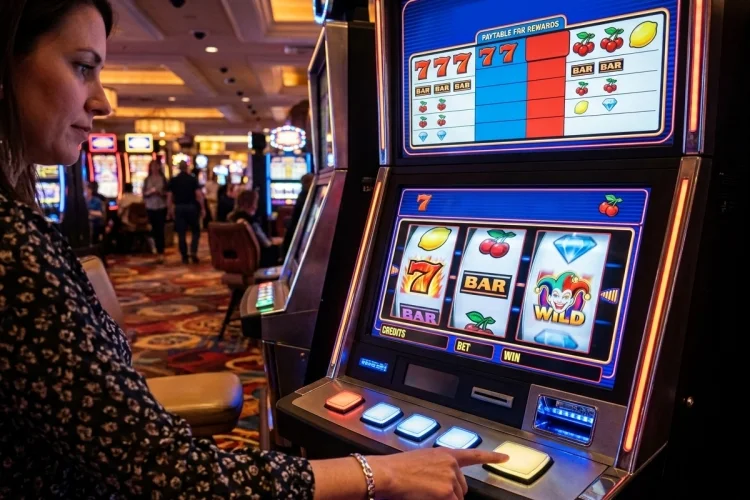

Online slots move quickly. Within a few moments, a player can select a game, deposit money, adjust the stake, and complete several rounds. That convenience is one reason first-time players should prepare before opening a real-money game.
Knowing how to play online slots is not just about pressing a button. A sensible first session should include a fixed entertainment budget, a time limit, an understanding of the paytable, and a clear stopping point.
No system can guarantee a profit from random slot games. The goal of preparation is therefore not to beat the software. It is to understand the cost, avoid common beginner mistakes, and maintain control over every decision made during the session.
Create a Session Budget
Choose the maximum amount you can afford to lose without affecting essential expenses. Treat this money like the cost of a cinema ticket or another form of paid entertainment.
Do not use borrowed money, emergency savings, or funds reserved for household needs. Once the budget has been reached, the session should end.
A separate deposit limit can create an additional barrier against unplanned spending. Many regulated operators provide daily, weekly, or monthly limit tools.
Decide How Long You Will Play
Money is not the only limit that matters. Fast, repetitive gameplay can make it easy to underestimate how long a session has lasted.
Choose an ending time before starting and use a phone alarm or the platform’s time reminder. A 20- or 30-minute practice session is easier to evaluate than open-ended play.
When the alarm sounds, complete no additional spins. Extending the session “just a few more minutes” can weaken the original plan.
Learn the Controls in Free-Play Mode
Use a demo version to identify the bet controls, paytable, spin button, sound settings, and balance display. Check how the total stake changes when you adjust the coin value or betting level.
Free-play games are useful for learning mechanics, but their credits have no real financial value. This can make it emotionally easier to take risks that would feel uncomfortable with money.
Some regulated standards require free-play versions to represent the prize distribution of their real-money equivalents accurately. Nevertheless, short demo results remain random and cannot forecast a paid session.
Know the Cost of Repeated Spins
A small stake can accumulate into a meaningful total when repeated. Multiply the stake by the number of planned rounds to estimate total wagering.
For example:
$0.25 per spin × 80 spins = $20 in total stakes
This figure represents the amount wagered, not necessarily the final loss, because some rounds may return prizes. However, the calculation reveals how quickly repeated betting adds up.
Always confirm the total stake before pressing spin. Do not rely on coin values or line amounts shown separately.
Read the Paytable and Game Information
The paytable explains the symbol combinations, special features, prize multipliers, and rules for bonus rounds. It may also display the game’s theoretical RTP.
RTP is an average calculated across a significant number of plays rather than a guaranteed return for one person or one session. A player can lose the entire planned budget even on a game with a relatively high stated percentage.
The information screen may also explain volatility, jackpot eligibility, and whether changing the stake affects access to certain prizes.
Avoid Chasing Losses
A common mistake is increasing the bet after several losing spins. The player may feel that a win is approaching or that a larger wager could recover the earlier losses.
Random games do not remember how much an individual has lost. A new spin is not required to compensate for previous results.
Keep the original stake unchanged or stop the session. Never redeposit simply because the first budget disappeared faster than expected.
Pay Attention to Your Reactions
Take a break when you feel frustrated, restless, unusually excited, or focused on recovering money. Strong emotions can make it harder to follow limits.
Warning signs include hiding spending, cancelling plans to continue playing, borrowing money, or thinking constantly about the next session. GambleAware and GamCare provide information, blocking options, limit-setting guidance, and support for people concerned about their gambling.
Self-exclusion is also available through individual operators and broader schemes in some jurisdictions.
A controlled first session starts long before the reels begin spinning. Set a loss limit, choose an ending time, learn the controls in demo mode, and calculate the cost of repeated rounds.
Read the paytable carefully and remember that RTP is a long-term average rather than a personal promise. Do not raise bets to recover losses or continue after reaching a planned limit.
The safest choice is always not to gamble, but adults who legally choose to play should treat slots strictly as entertainment. Review your limits before starting and leave the game as soon as the session stops feeling controlled.