
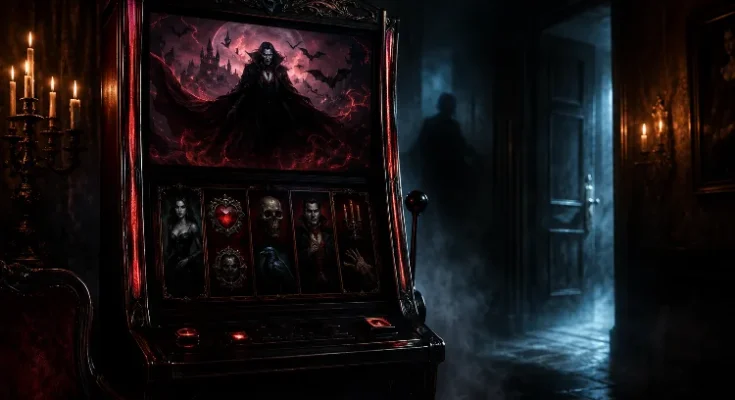
Horror-Themed Slots: Why Animation Makes Fear Feel Interactive

Horror-Themed Slots: Why Animation Makes Fear Feel Interactive

A creepy background can establish a horror theme, but atmosphere becomes much stronger once the scene starts reacting. A portrait suddenly moves. A vampire transforms. The lights flicker as the reels stop. A shadow passes behind the game board just before a bonus begins.

That sense of movement is one reason Horror-Themed Slots can feel very different from ordinary themed games.

Animation allows the environment to respond to what happens on the reels, while sound gives those movements weight and timing. Horror research in virtual environments shows that carefully designed surroundings can generate meaningful emotional reactions, including fear and negative affect.

Slots are obviously not survival-horror games, but designers can borrow the same audiovisual vocabulary—darkness, uncertain movement, abrupt changes, environmental sound, and anticipation—to turn a static theme into an interactive atmosphere.

Animation Makes the Background Feel Alive

A static haunted house is artwork.

A haunted house where curtains move, candles flicker, doors slowly open, and distant figures appear is an environment.

That difference matters.

Even subtle background motion can stop the interface from feeling like reels placed over a poster.

Designers can create atmospheric movement without distracting from gameplay. Fog might drift slowly behind the grid. Clouds can move across a moon. A chandelier can sway slightly during ordinary spins.

Then the animation can become stronger when the game changes state.

The key is contrast.

Normal motion remains subtle.

Feature motion becomes obvious.

That creates a visual hierarchy where players naturally notice mechanical events.

Research into frightening virtual environments suggests that environmental characteristics contribute to emotional responses, which helps explain why movement, spatial cues, and atmosphere can work together so effectively.

Characters Can Visually Announce Features

A horror character can be more than a high-value symbol.

It can become an animated interface element.

Imagine a vampire standing beside the reels. During normal play, the character barely moves. When a special feature activates, the eyes glow, the character transforms, and bats cross the screen.

The animation tells the user:

this event is different.

Play’n GO’s Count Jokula centres its theme around a transforming vampire and connects that idea directly with its Shapeshifter and respin features.

Likewise, Wild Blood 2 uses multiple vampire characters with individual abilities connected to the game’s bonus structure.

This approach creates stronger mechanic-theme alignment.

Instead of displaying an anonymous text box saying “feature activated,” the game world itself announces the feature.

That tends to feel more natural and visually memorable.

Transformation Is Especially Effective in Horror

Horror is full of transformation.

Humans become vampires.

People turn into werewolves.

Normal rooms become supernatural spaces.

Friendly characters become monsters.

These ideas translate unusually well to slot features.

A regular symbol can transform into a wild.

A normal reel can become corrupted.

A character can shift form before triggering a respin.

Play’n GO’s spooky-game catalogue includes examples involving vampires, werewolves, zombies, spirits, and transforming characters, showing how often horror imagery and transformation mechanics naturally overlap.

This works because the mechanic already resembles the story.

When an ordinary symbol turns into a wild, horror animation can present it as a supernatural change rather than simply replacing one image file with another.

The mathematics has not changed.

The presentation makes the mathematical state change feel meaningful.

That is a small but powerfull difference.

Lighting Can Control Attention

Lighting is one of the easiest ways to make a feature feel important.

The screen does not need to become completely dark.

Instead, designers can temporarily reduce background brightness while leaving important symbols illuminated.

A bonus character may appear in a bright doorway.

A wild could glow against a darker reel.

A multiplier can become the brightest object in the scene.

This technique directs attention without adding more interface elements.

Horror environments often use uncertainty and limited visibility to create tension. Research using virtual threat environments similarly employs environmental design and ambiguous cues to create expectations of danger.

Slots can use a much softer version of the same idea.

Darkening the edges of the screen while highlighting a potential feature keeps focus where it belongs.

The danger is readability.

If the design becomes too dark, users may struggle to distinguish symbols or important information.

Atmosphere should never make basic interaction harder.

Jump-Scare Logic Can Become Feature Pacing

A slot does not need literal jump scares to borrow their pacing structure.

The general formula is useful:

normal state,

anticipation,

sudden event,

release.

Research analysing jump scares describes similar temporal stages, including baseline audiovisual levels, anticipation, the arrival of a stinger, and a return toward baseline.

Imagine two scatters landing.

The background begins moving more slowly.

Music fades.

The remaining reel spins.

Then the third scatter appears with a sudden animation and sharp audio hit.

That is essentially horror pacing applied to feature presentation.

The game builds uncertainty and then resolves it.

Importantly, the technique can work even when the result is not frightening.

The genre simply gives designers permission to use more dramatic contrast.

Overusing the method, however, reduces its effect.

If every small win receives a screen-shaking animation, major features no longer feel major.

Reel Animation Can Become Part of the Story

Traditional reel animation has a straightforward job: symbols move and then stop.

Horror games can turn that basic movement into thematic behaviour.

Reels might appear scratched or distorted during a supernatural feature.

A ghost may pass through them.

A monster could physically destroy symbols before replacements appear.

Blood, fog, smoke, or shadows can visually connect cascades with the horror world.

Play’n GO describes Lordi Reel Monsters as using animated monster characters alongside grid interactions, with individual band members affecting symbols and wilds in different ways.

This is stronger than playing an unrelated character animation beside the reels.

The character’s movement has a direct relationship with the mechanical change on the grid.

As a result, the game feels more interactive even though the underlying outcome remains determined by its normal mathematical system.

Sound Gives Animation Physical Weight

Watch a monster slam into the reels with the sound muted.

Then add a deep impact, metallic vibration, and short musical accent.

The animation suddenly feels heavier.

Audio creates a sense of physical consequence that visual motion alone often cannot achieve.

Environmental audio can also suggest unseen threats, with research noting that sounds such as footsteps can imply activity outside the visible scene.

That technique is particularly useful for horror slots because much of the world sits outside the reel grid.

A sound from somewhere off-screen can make the interface feel larger than what is visible.

Developers can also give recurring features unique audio signatures.

A particular growl means one wild type.

A bell signals the scatter.

A rising tone accompanies multiplier growth.

After enough repetition, players can recognise mechanical events by sound even before the animation finishes.

That improves readability while strengthening atmosphere.

Bonus Rounds Can Shift Into a Different Horror World

A feature transition is an opportunity to change more than the reels.

The entire setting can evolve.

A normal game outside a mansion can move inside during Free Spins.

A quiet graveyard can become filled with ghosts.

A human character can transform into a monster.

The colour palette may shift, animation speed can change, and music can move into a more intense arrangement.

Wild Blood 2, for example, builds its features around a haunted mansion and vampire characters, with different bonus mechanics and character powers creating distinct feature states.

These transitions help separate base play from bonuses.

The user does not need to constantly check a counter to know something has changed.

The whole audiovisual enviroment communicates it.

This is where horror themes can be particularly effective because dramatic transformation already fits the genre.

Horror Atmosphere Needs Restraint

More animation does not always mean more atmosphere.

Constantly moving backgrounds can become distracting.

Repeated jump effects become predictable.

Excessive flashes can make features harder to follow.

The strongest horror usually leaves room for expectation.

Research into recreational horror found that enjoyment and fear can have a nonlinear relationship rather than simply increasing together indefinitely. While a slot is a different medium, the broader insight is useful: maximum intensity at every moment is not necessarily the most engaging presentation.

Designers need quiet phases.

A slowly moving shadow may be enough during ordinary spins.

Save the dramatic transformation for a meaningful mechanical event.

This produces better pacing and gives important animations more impact.

It also prevents the interface from becoming visually exhausting.

Horror-Themed Slots become more convincing when animation makes the game world react to features instead of simply decorating the reels. Character transformations, changing lighting, environmental movement, and audiovisual timing can communicate bonuses while building atmosphere.

The strongest designs use restraint, saving dramatic motion for meaningful events. When animation and mechanics move together, horror becomes part of the interaction rather than just the theme.
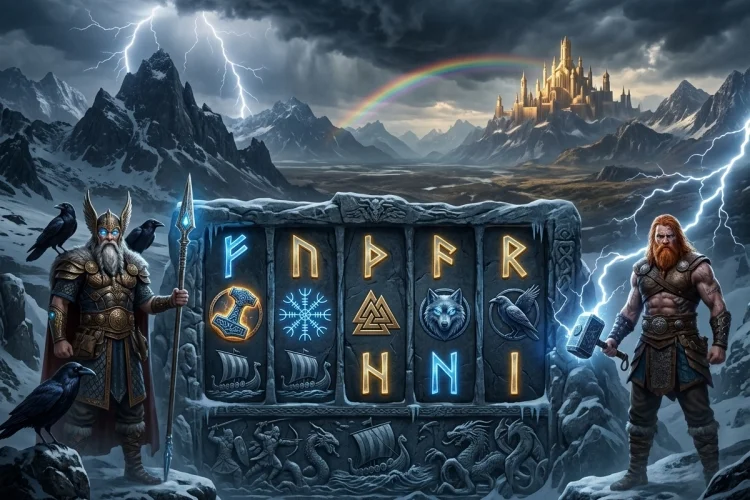
Norse Mythology Slots Guide: From Odin to Ragnarök Features

Norse Mythology Slots Guide: From Odin to Ragnarök Features

A game does not become authentically Norse simply because it places a horned helmet beside the reels. In fact, developers frequently mix mythology, popular culture, fantasy artwork, and general Viking imagery to create a dramatic setting.

The best Norse Mythology Slots connect their visual choices with understandable mechanics. A rune may function as a multiplier, Thor can add wilds, Freya may control bonus levels, and Ragnarök can become the final free-spin event.

Other games use the same symbols without giving them any meaningful role. This guide explains what to examine when comparing Norse-themed releases, from cultural references and win systems to mobile readability and feature design.

Separate Norse Mythology from General Viking Imagery

Norse mythology concerns gods, supernatural beings, legendary places, and stories preserved largely through medieval texts and archaeological evidence. Viking imagery focuses more broadly on ships, warriors, shields, weapons, raids, and exploration.

The National Museum of Denmark notes that knowledge of Odin, Thor, and other gods comes from sources including the Eddas and Icelandic sagas. Their names also survive in Scandinavian place names.

A game may combine both categories. That creative mixture is normal, but reviewers should avoid presenting fictional details as historical facts.

Check Whether the Runes Make Sense

Runes were alphabetic symbols used to record sounds. The Viking Age alphabet did not contain a separate character for every sound, so readers relied on context when interpreting inscriptions.

Most surviving runic inscriptions are not magical spell books. Many commemorate people, ownership, or ordinary messages, although literary traditions also connect runes with protection and magic.

Slot games usually use runes as colorful matching symbols. That is acceptable as fantasy design, but it is a simplified interpretation.

Look at How Each God Affects Play

A thoughtful game assigns mechanics that match the character’s presentation. Thor commonly controls lightning or wild additions, while Loki creates transformations and mystery symbols.

The original Viking Runecraft assigns different powers to Odin, Thor, Freya, and Heimdall. Its Apocalypse sequel continues that system with unique wild patterns from each god.

The Faces of Freya takes a more focused approach by building several free-spin levels around different aspects of one goddess.

Compare Traditional Reels with Modern Grids

Not every Norse game uses the same structure. Some look like classic three-reel machines, while others use large grids, clusters, changing reel heights, or Megaways.

Riches of Midgard starts as a compact 3×3 game but expands during free spins. Fury of Odin Megaways uses six reels and up to 117,649 winning ways. Viking Runecraft is built around a 7×7 grid.

Compare the winning system before comparing the artwork. A simple payline game and a cascading grid are designed for very different experiences.

Examine the Bonus Progression

A good bonus should explain what the player is trying to achieve. The goal might involve charging a meter, collecting spirit wilds, upgrading a god, or surviving Ragnarök.

Odin Protector of Realms asks players to charge Odin’s forged staff while defending Asgard through a grid-based format.

Viking Runecraft: Apocalypse uses a Spirit Wild collector to unlock Gifts of the Gods before leading into its broader Ragnarök theme.

Visible progression can make a complicated grid easier to follow, especially when each stage has a clear visual effect.

Test Symbol Clarity on Mobile

Detailed warriors, wolves, ravens, helmets, and rune stones can look impressive on a desktop monitor. On a small phone, similar colors or shapes may become difficult to distinguish.

Use demo mode to test portrait and landscape layouts. Check whether the stake, balance, wild symbols, and feature meters remain readable without repeated zooming.

Viking Runecraft and Odin Protector of Realms both publish desktop and mobile presentations, but actual usability can still vary according to the phone, browser, and screen size.

Do Not Choose Only by Maximum Potential

A dramatic theme or large advertised maximum does not explain how frequently features occur. It also does not reveal the game’s volatility or predict a short session.

Check the RTP, stake range, volatility, maximum win, bonus trigger, and whether optional feature purchases are available. Riches of Midgard, for example, lists a 96.03% RTP, an 80x feature-buy cost, and a 1,200x maximum payout.

Those details describe the individual game, not Norse-themed titles as a category.

Norse Mythology Slots range from compact Viking reel games to large grids filled with gods, runes, mystery symbols, and Ragnarök bonuses.

The strongest titles connect the theme with their mechanics instead of using Norse artwork as decoration.

Compare the exact win system, god powers, bonus progression, RTP, volatility, and mobile interface. Remember that real runes were primarily writing symbols and that games freely adapt historical stories for entertainment.

Open several demos, read their help screens, and select the title whose symbols and features remain easiest to understand. Familiar gods may attract attention, but clear gameplay should guide the final choice.

Classic Fruit Slots: How Retro Games Evolved Online

Classic Fruit Slots: How Retro Games Evolved Online

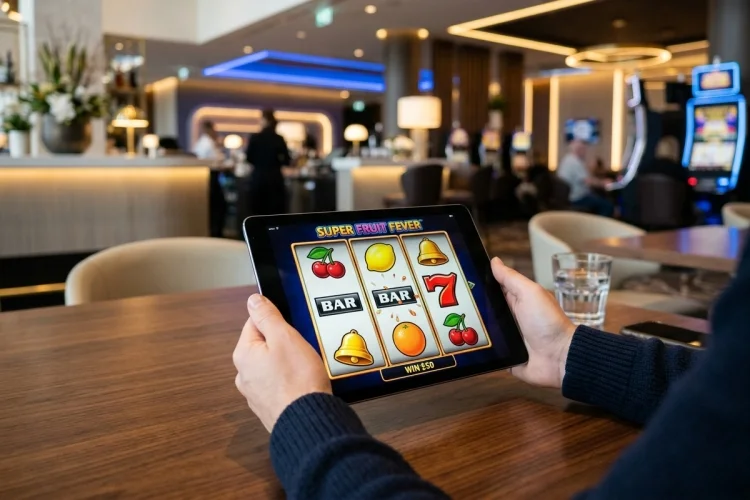
Fruit machines began with physical reels and limited symbol combinations. Modern online versions can use expanding grids, thousands of winning ways, detailed animation, and several bonus systems while still displaying the same familiar cherries and lemons.

The evolution of Classic Fruit Slots shows how digital technology can update an old format without removing its identity.

Some developers preserve the original fixed-line structure, while others use the fruit theme as a foundation for Megaways mechanics, jackpots, feature purchases, and expanding reel areas.

Looking at that development helps explain why the category continues to attract both retro-game fans and players interested in modern features.

From Bells and Gum to Fruit Machines

Charles Fey’s early mechanical designs helped establish the three-reel slot format and the recognizable bell symbol. Later machines used fruit images connected with gum flavors, helping popularize the term “fruit machine,” particularly in the United Kingdom.

The early machines had physical limitations. Reel size restricted the number of possible symbol combinations, and features were controlled by mechanical parts rather than software.

Digital games removed many of those restrictions.

Early Video Versions Preserved the Basic Formula

The first generations of video fruit games generally kept the familiar reel structure. They replaced mechanical parts with screens but continued to use fixed paylines, sevens, bells, and colorful fruit.

Sizzling Hot deluxe is a clear example of this traditional approach. It has five reels and five fixed lines, with NOVOMATIC presenting it as a classic video game.

This style remains available because some players value a focused experience without lengthy bonus instructions.

Wilds and Multipliers Added More Variety

Digital formats made it easier to add symbols that could change how a combination was calculated. Wild icons could substitute for ordinary fruit, while multipliers could increase qualifying awards.

NetEnt’s Fruit Shop combines classic imagery with wild substitutions and a multiplier. Its official information lists a 5×3 layout, 15 paylines, 96.71% RTP, and an 800x maximum payout.

Play’n GO’s Fire Joker adds a respin when stacked symbols appear on two reels without forming a win. A separate wheel can apply a multiplier of up to ten times after a full-screen combination.

Variable Reels Changed the Number of Winning Ways

Megaways games use changing reel heights, so the number of symbols and potential combinations can vary from one spin to the next.

Fruit Shop Megaways updates NetEnt’s earlier game with six reels and between two and seven symbols on each reel. It can offer up to 117,649 winning ways, a progressive free-spin multiplier, and a maximum payout of 5,200x.

The design still looks like a cheerful fruit game, but the mathematical structure is far more complex than the original version.

Expanding Grids and Bonus Modes Add Depth

Modern releases can change the size of the playing area during a bonus. Instead of using one fixed screen, a game may unlock extra rows or feature modes.

Fruit Shop Grand Re-Opening, released in July 2026, begins with a 5×3 structure and can expand through several bonus-spin modes. Its official page lists a 96.37% RTP, a maximum of 5,000x, and playing areas extending as far as 5×6.

This is an example of a classic theme supporting a much deeper modern feature set.

Jackpots Can Be Added to Familiar Games

Providers can also attach jackpot systems to established fruit-game brands. The base reels remain recognizable, while special symbols or bonus rounds provide access to additional prizes.

NOVOMATIC’s Cash Connection version of Sizzling Hot adds jackpot elements to what the company calls classic fruit-game entertainment. Sizzling Hot Treasure Inferno combines the familiar base game with three bonus modes using a Lock & Spin feature.

This approach gives long-running titles a new format without abandoning their original visual identity.

Mobile Technology Supports the Retro Style

Modern fruit games can run in mobile browsers and apps, automatically fitting their controls to smaller screens. Simple symbols often remain clear even when the reel area is reduced.

The lightweight visual concept can also work well on older devices, although actual performance depends on animation, software optimization, memory, and connection quality.

A demo is the easiest way to test whether the layout remains readable on a particular phone.

How to Compare Old and New Fruit Games

Begin with the reel structure and winning system. Then check RTP, volatility, maximum win, paylines or payways, and the rules for any bonus feature.

A classic five-line game may be easier to understand, while a Megaways or jackpot version may provide more variation. Neither style is universally better.

Avoid choosing only by the size of the advertised maximum. A larger theoretical payout does not explain its probability or predict the outcome of a short session.

Classic Fruit Slots have evolved from mechanical three-reel machines into flexible digital games.

Traditional versions preserve fixed paylines and straightforward combinations, while newer releases introduce wild reels, multipliers, changing reel heights, expanding grids, and jackpots.

The fruit symbols remain popular because they provide a recognizable connection between these very different formats. Before selecting a game, decide whether you prefer focused retro play or a modern interpretation with deeper mechanics.

Open the paytable, compare the published specifications, and test both styles in demo mode. The strongest choice is the version whose rules, screen design, and pace are easiest for you to enjoy.